Pool Fencing Regulations NSW: How Metal Fabrication In Coffs Harbour Keeps Your Home Compliant
For many homeowners, a new pool marks the end of a long planning process. The landscaping is sorted, the tiles are chosen, and the builder is booked. Then someone mentions pool fencing regulations, and suddenly there's a separate set of rules to navigate: rules that carry real legal weight. In NSW, a non-compliant pool barrier isn't a minor oversight you can tidy up later. It's a liability, and in some cases, a reason a pool can't legally be used at all. Understanding what the law requires, and how precision metal fabrication in Coffs Harbour fits into meeting those requirements, saves time, money, and the stress of failed inspections.
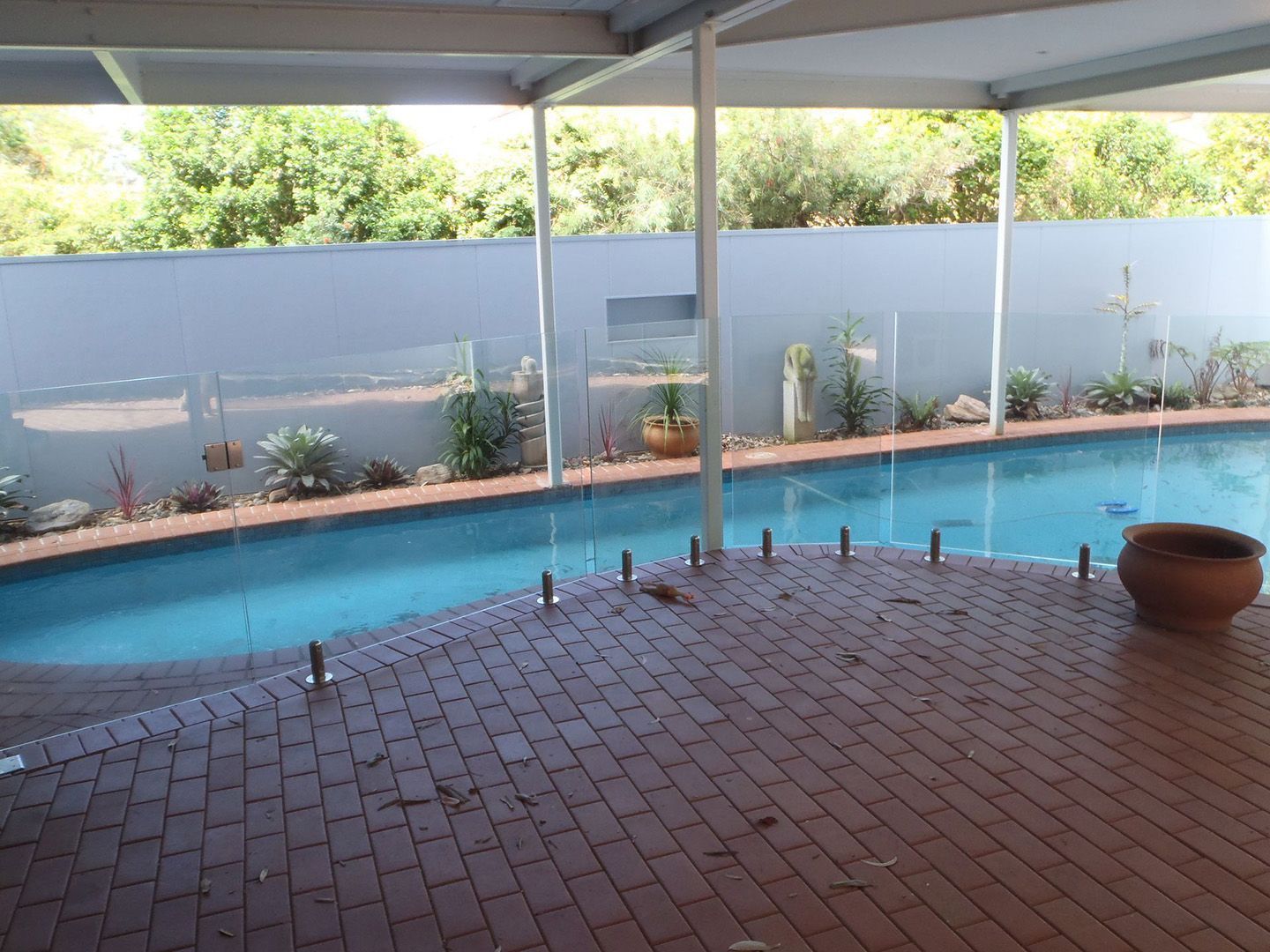
NSW Pool Barrier Laws: What the Australian Standard Actually Requires
Pool barrier compliance in NSW is governed by Australian Standard AS 1926.1-2012, which sets out the technical requirements for swimming pool safety barriers. Local councils enforce these standards through inspections, and every pool in NSW must be registered on the NSW Swimming Pool Register regardless of its age. The standard covers everything from fence height and gate hardware to the clearances required around the barrier perimeter.
- All pool barriers must meet the dimensional, structural, and hardware requirements set out in AS 1926.1-2012
- Gates must be self-closing and self-latching, with the latch positioned on the pool side of the gate
- All pools must be registered on the NSW Swimming Pool Register, with registration transferable on property sale
- Non-climbable zones (NCZs) must be maintained on the outside of the barrier to prevent assisted climbing
Metal fabrication plays a direct role in meeting these requirements. Custom-fabricated barriers are designed and cut to the specifications in the standard from the outset, rather than adapted from generic components after the fact.
How High Does a Pool Fence Need to Be in NSW?
The minimum height for a pool barrier in NSW is 1,200 mm, measured from the finished ground level on the outside of the fence. This figure is often misunderstood. It applies to the barrier as a whole, not just the visible panel. Posts, rails, and any intermediate structure that could assist climbing all factor into how the barrier is assessed. The non-climbable zone rules add another layer: within 900 mm of the outside of the fence, there must be no climbable objects such as landscaping, furniture, or fixtures.
- Minimum barrier height: 1,200 mm from finished ground level on the outside face
- NCZ requirement: no climbable objects within 900 mm of the outside of the fence
- Any horizontal rails within the climbable zone must meet strict spacing and placement rules
- Ground clearance beneath the barrier must not exceed 100 mm at any point
Precision-cut aluminium panels and posts remove the measurement errors that often lead to re-work. When each component is fabricated to exact dimensions, there is no guesswork at the installation stage.
Your Pool Fence Fails Inspection: Here's What Happens Next
A failed pool fence inspection in NSW is not something a homeowner can sit on. Under NSW legislation, once council issues a written rectification notice, the non-compliance must be fixed within seven days. That is a tight window, particularly if the issue involves structural components that need to be remade rather than adjusted. Beyond the immediate rectification, there is a re-inspection process, and repeated non-compliance can attract significant fines.
- Failure to rectify within 7 days of notice can result in on-the-spot fines under the Swimming Pools Act 1992
- Common failure points include incorrect gate latch height, gaps beneath panels, and non-compliant NCZs
- Re-inspection fees apply, adding cost on top of the rectification work itself
- A pool cannot be legally used until a valid Compliance Certificate is in place
A fence fabricated to specification from the first cut removes this risk. There is no compromise position when council inspects — the barrier either meets the standard or it doesn't.
Approved Materials for Pool Fencing in NSW: Steel, Aluminium, and Glass
AS 1926.1-2012 doesn't prescribe a single material for pool barriers, but it does set structural and dimensional performance requirements that any material must satisfy. In practice, the most common choices are steel, aluminium, and toughened glass. Each has genuine trade-offs, and the right choice depends on the property, the pool design, and the surrounding environment. For properties in coastal or high-humidity areas, material selection has a direct impact on long-term performance.
- Steel: strong and cost-effective, but requires regular maintenance to prevent corrosion in coastal climates
- Aluminium: lightweight, corrosion-resistant, and low-maintenance, well suited to coastal and semi-coastal environments
- Toughened glass: provides unobstructed sightlines to the pool area and suits contemporary architecture
- All materials must meet the structural performance requirements of the standard, not just dimensional ones
Metal fabrication allows both steel and aluminium barriers to be built to precise structural specifications, ensuring the finished product performs as the standard requires.
Is Frameless Glass Pool Fencing Compliant in NSW?
Frameless glass pool fencing is a popular choice for homeowners who want clear sightlines to the pool area without the visual weight of a traditional barrier. It's also a source of confusion when it comes to compliance. Frameless glass pool fencing is compliant in NSW when it's installed to the requirements of AS 1288 and AS 1926.1-2012, using approved spigot systems, correct glass thickness, and compliant gate hardware. Many homeowners choose frameless pool fencing for its clean sightlines and compliance-friendly design.
- Glass panels must be toughened to AS 1288 specifications, typically 12 mm thickness for frameless installations
- Spigot systems must be engineered to carry the specified loads without deflection beyond permitted limits
- Gates must use compliant latching and self-closing mechanisms — the same rules apply regardless of fence material
- Panel-to-panel gaps must not exceed 100 mm at any point in the barrier
The structural spigots, posts, and gate frames used in frameless systems are precision-fabricated metal components. Getting them right is a fabrication task, not just an installation one.
When a Pool Renovation Triggers a Full Compliance Upgrade
One situation that catches homeowners off-guard is the compliance re-trigger that can accompany a pool renovation. Many assume that an existing barrier can stay in place as long as it isn't physically altered. In practice, changes to the pool area, its surroundings, or the barrier itself can require the entire barrier to be brought up to current standards, regardless of when it was originally installed. For older properties, this can mean a barrier that was compliant under previous rules no longer qualifies.
- Replacing or altering part of a pool barrier typically requires the whole barrier to meet current standards
- Changing the pool surrounds, landscaping, or adding structures near the NCZ can trigger re-inspection
- Older barriers built to superseded standards are not automatically grandfathered when alterations are made
- Council may require a full barrier assessment as part of the development or renovation approval process
If a renovation is already underway, incorporating a new fabricated barrier into the project scope from the start avoids the cost and delay of a two-stage approach.
The Role of a Compliance Certificate in NSW Pool Ownership
A Compliance Certificate is the formal document that confirms a pool barrier meets the requirements of AS 1926.1-2012. In NSW, this certificate must be obtained before a pool can be used, and it must be issued by a council inspector or accredited certifier following a physical inspection of the barrier. For property owners, the certificate has practical importance beyond the initial build. It is required during the sale or lease of a property that includes a pool built after 1990.
- A Compliance Certificate must be in place before a pool is used: council inspections are required to obtain one
- For properties with pools built after 1990, the certificate must be provided to purchasers and tenants
- Certificates are issued by council-accredited certifiers following a physical inspection of the completed barrier
- A certificate can be issued with conditions, requiring specific rectifications before it becomes unconditional
A correctly fabricated and installed barrier passes this certification process with minimal back-and-forth. When the components are built to standard from the start, the inspector has little to query.
What Does the Fabrication Process Look Like for a Compliant Pool Barrier?
Understanding how a pool barrier moves from concept to compliant installation helps homeowners plan their project with realistic expectations. The process begins with a detailed site measure, which informs the design and ensures every panel, post, and gate is specified to the actual conditions of the site rather than a generic template. From there, fabrication of each component takes place to the dimensional requirements of AS 1926.1-2012. For a full breakdown of what this involves technically, our guide to understanding the different types of metal fabrication explains the key processes involved.
- Site measure: every dimension recorded against the actual finished ground level and pool perimeter
- Design to specification: panel heights, post spacings, and gate dimensions all confirmed against AS 1926.1-2012 before fabrication begins
- Component fabrication: panels, posts, gate frames, latches, and hinges produced as a coordinated system
- Installation and check: each component fitted to spec, with a final review against compliance requirements before certification is sought
When every component is fabricated as part of a system rather than sourced from different suppliers and adapted on site, the installation is predictable, and the compliance outcome is far more certain.
Ready to Build a Pool Barrier That Passes First Time?
We at Watsons Aluminium understand what is at stake when a pool fence inspection is on the horizon. The Coffs Harbour region's coastal conditions add another layer of consideration: salt air and humidity mean material choice and fabrication quality matter well beyond the day of inspection. Our team works to AS 1926.1-2012 throughout the fabrication process, so every component arriving on site is already built to the standard that Coffs Harbour City Council expects. For pool barriers that meet every NSW requirement, our team offers expert metal fabrication in Coffs Harbour built to AS 1926.1-2012 spec.
To get your project started, whether it's a new pool barrier, a renovation upgrade, or a replacement for a non-compliant fence — contact our team for a free quote today.